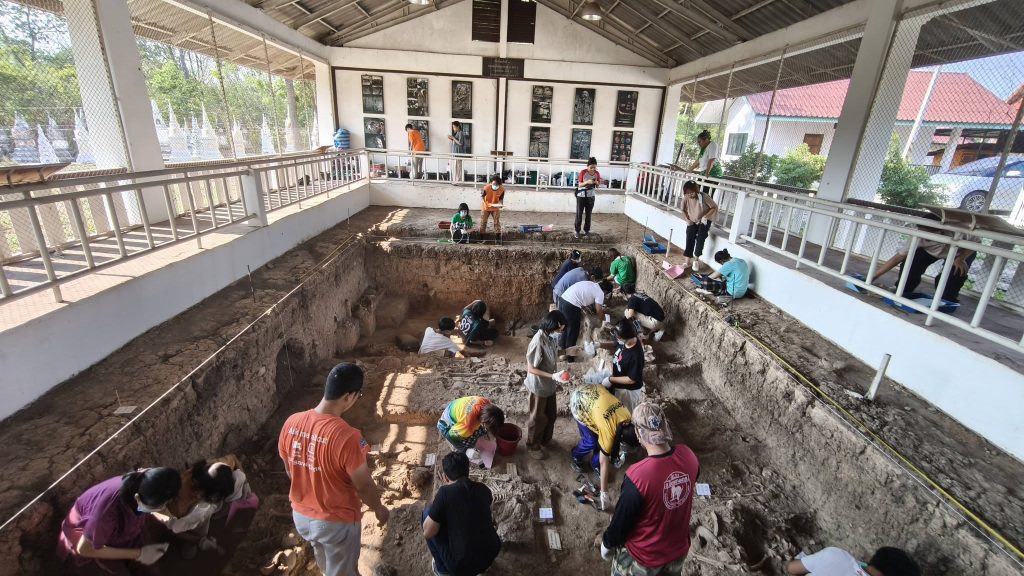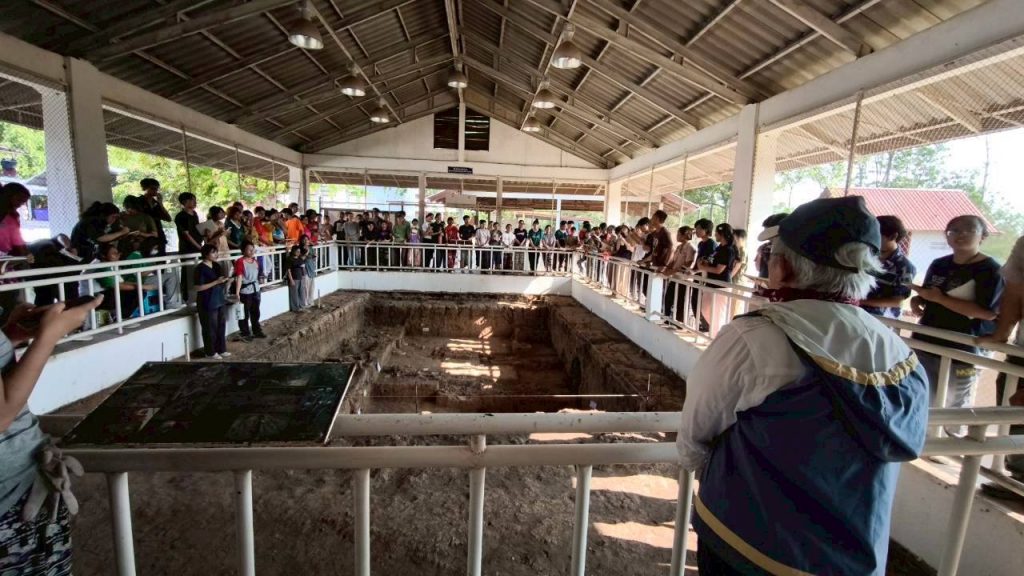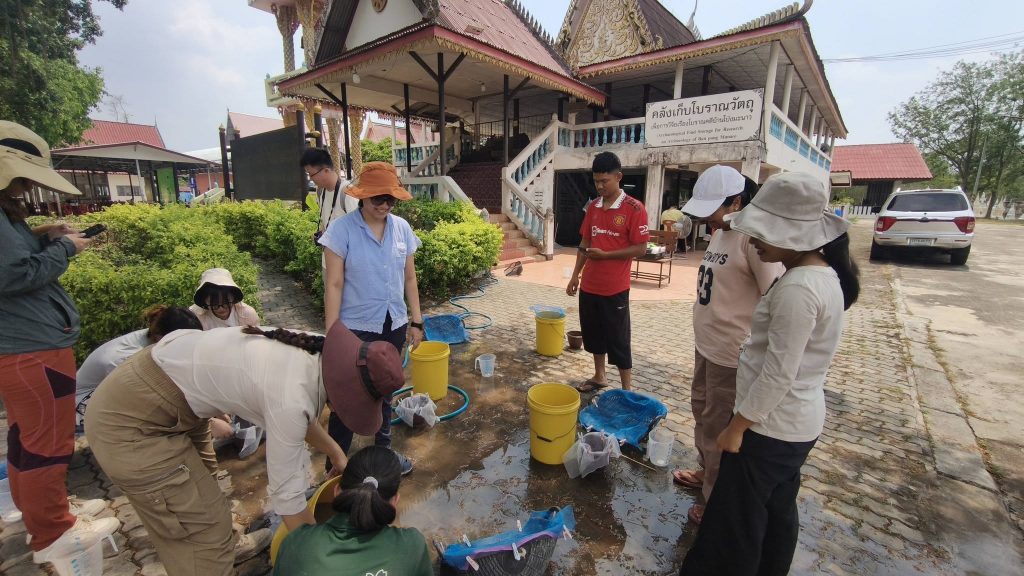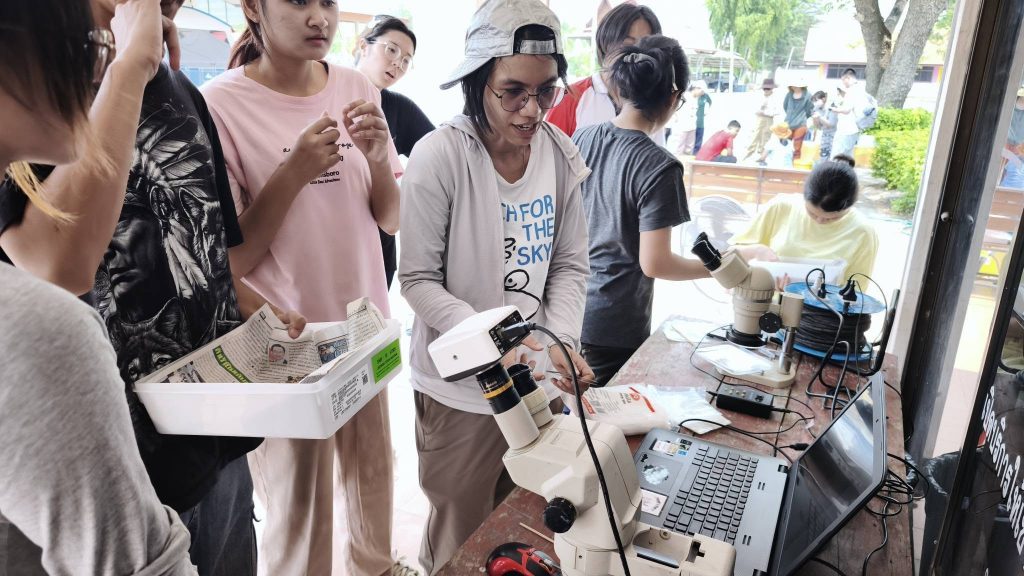

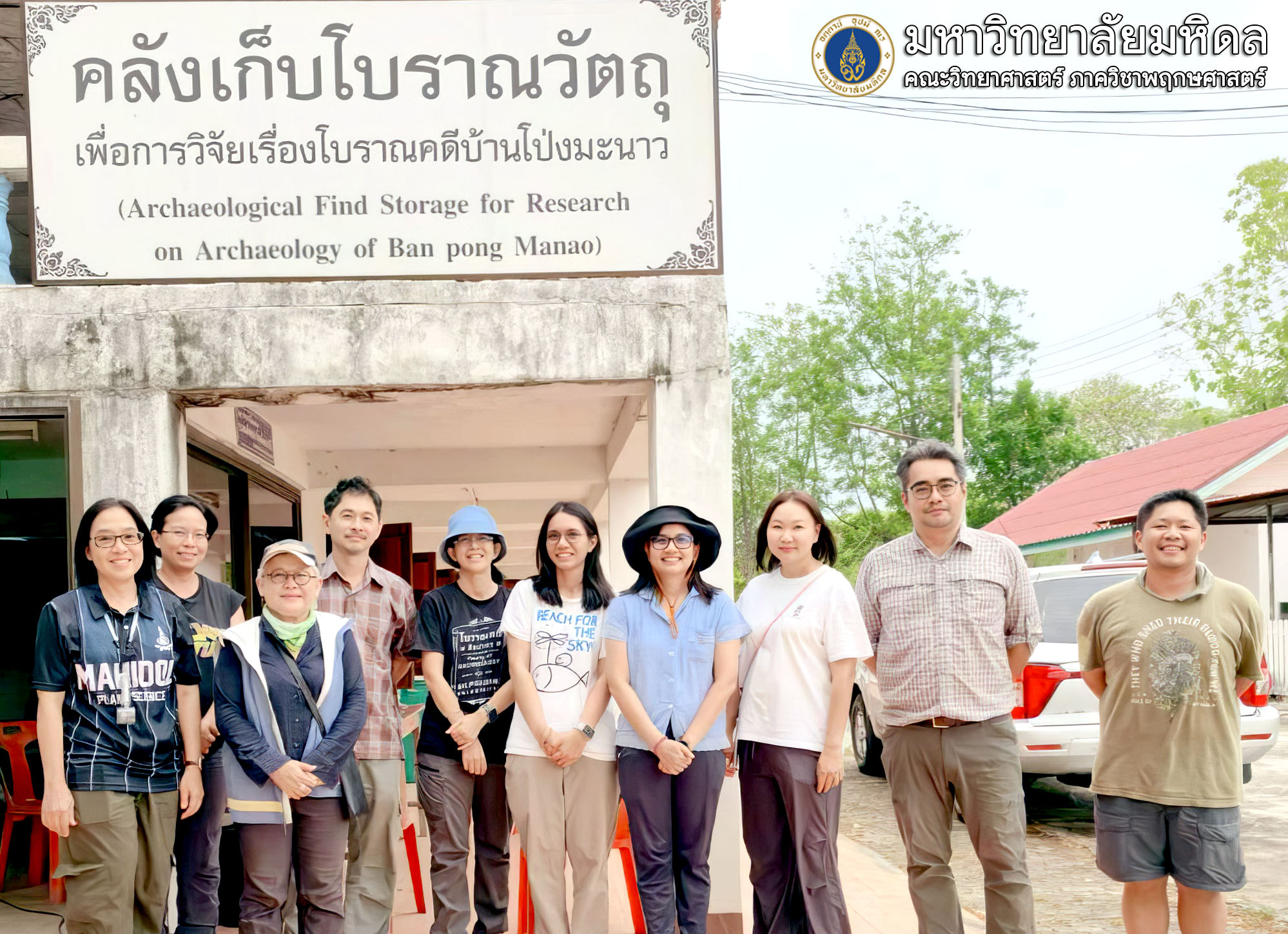
On 29 April 2026, the Archaeobotany Team from Mahidol University, consisting of Assistant Professor Dr. Sasivimon Swangpol and Dr. Apichaya Englong from the Department of Plant Science, Faculty of Science, together with Associate Professor Dr. Poramita Phanvong from the Faculty of Environment and Resource Studies, participated as guest lecturers and workshop instructors in archaeobotany for students of the Department of Archaeology, Faculty of Archaeology, Silpakorn University at the Ban Pong Manao Archaeological Site in Lopburi Province. The activity focused on transferring knowledge and practical techniques for studying botanical evidence in archaeological contexts. The program included lectures and hands-on training on important topics such as flotation and wet sieving, which are essential methods for separating plant remains and small materials from archaeological sediments. Students also received practical training in the use of microscopes to examine, analyze, and identify plant fragments obtained from sediment samples collected during field excavations.
In addition, the team of lecturers visited the excavation site and exchanged fieldwork experiences with first- to third-year students and faculty members from the Department of Archaeology, who were actively conducting systematic archaeological excavations based on rigorous academic methodologies. The students gained hands-on experience in the complete archaeological research process, including site surveying, excavation techniques, field data recording, as well as the systematic collection and analysis of archaeological samples. This activity reflected the strong academic collaboration between the fields of plant science, environmental studies, and archaeology, which play important roles in generating knowledge about past human lifestyles, environmental conditions, and the utilization of plants in ancient societies. Such interdisciplinary studies contribute significantly to the long-term understanding of Thailand’s history and cultural heritage. The field visit and academic exchange also served as an excellent opportunity to promote integrated learning, while enabling students to develop field research skills and gain direct experience working closely with experts from diverse academic disciplines.