

Students from the Department of Plant Science, Faculty of Science—Ms. Wilailak Saechan, Ms. Sasima Aksornthirathawon, and Ms. Mutita Mankhan—under the academic supervision of Dr. Witsuwat Songnuan, proudly participated in and presented their research at the Thai Immunology Annual Meeting 2026. The conference was organized by the Allergy, Asthma and Immunology Association of Thailand (AAIAT), in conjunction with the Thailand Hub of Talents in Cancer Immunotherapy (TTCI), under the theme: “The Translational Immuno-Revolution: From Fundamental to Patient Impact.” Their research contributions focused on allergy-related studies, particularly addressing environmental allergens and their implications for public health in tropical urban settings.
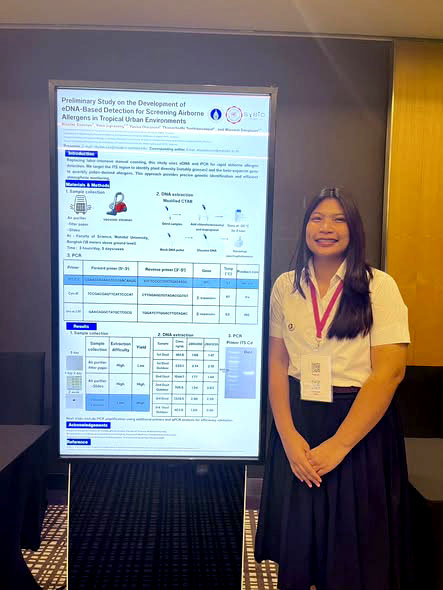
Ms. Wilailak Saechan presented her research entitled: “A Preliminary Study on the Development of Environmental DNA (eDNA)-Based Detection for Airborne Allergen Screening in Tropical Urban Environments.” The study demonstrated that eDNA combined with PCR techniques can successfully identify the taxonomic composition of airborne allergens from dust samples. Notably, major grass allergens such as Cynodon were accurately detected, highlighting the effectiveness of molecular approaches in identifying allergen diversity and supporting health risk assessment.
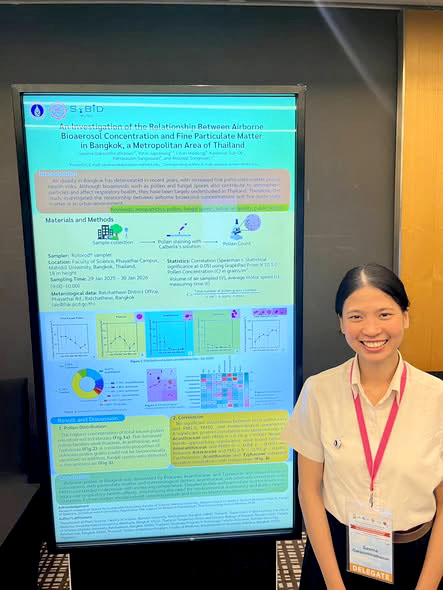
Ms. Sasima Aksornthirathawon presented her research on: “The Relationship Between Bioaerosol Concentrations and Particulate Matter Levels in Bangkok, a Major Urban Area of Thailand.” The findings revealed that grass pollen was the most prevalent bioaerosol detected in the air. However, no statistically significant correlation was found between pollen concentrations and fine particulate matter (PM). These results provide valuable insights for environmental monitoring and public health planning to mitigate allergy-related risks in urban areas.
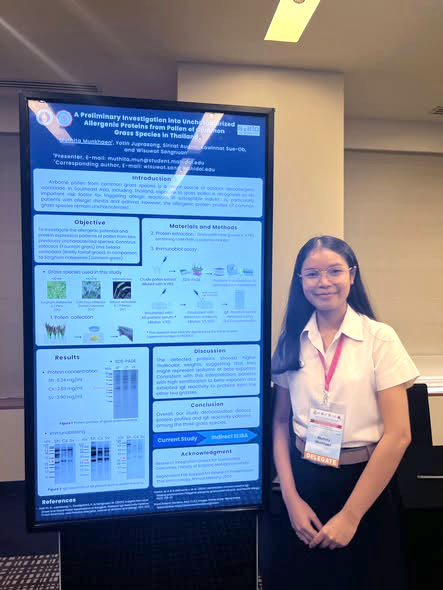
Ms. Mutita Mankhan presented her research titled: “A Preliminary Study on Uncharacterized Allergenic Proteins in Common Grass Pollens in Thailand.” The study found that different grass species exhibited distinct protein profiles and IgE reactivity patterns. Individuals sensitized to beta-expansin proteins tended to show cross-reactivity with other grass species. The identified proteins may represent isoforms of major allergens, and further validation using ELISA techniques is recommended for future studies.
Overall, the participation of the students in this international academic conference reflects their strong research capabilities and contributes to advancing knowledge in allergen science, with potential applications in environmental health surveillance and disease prevention in tropical urban settings.
Credit: PlantScienceMUSC
Credit: PlantScienceMUSC