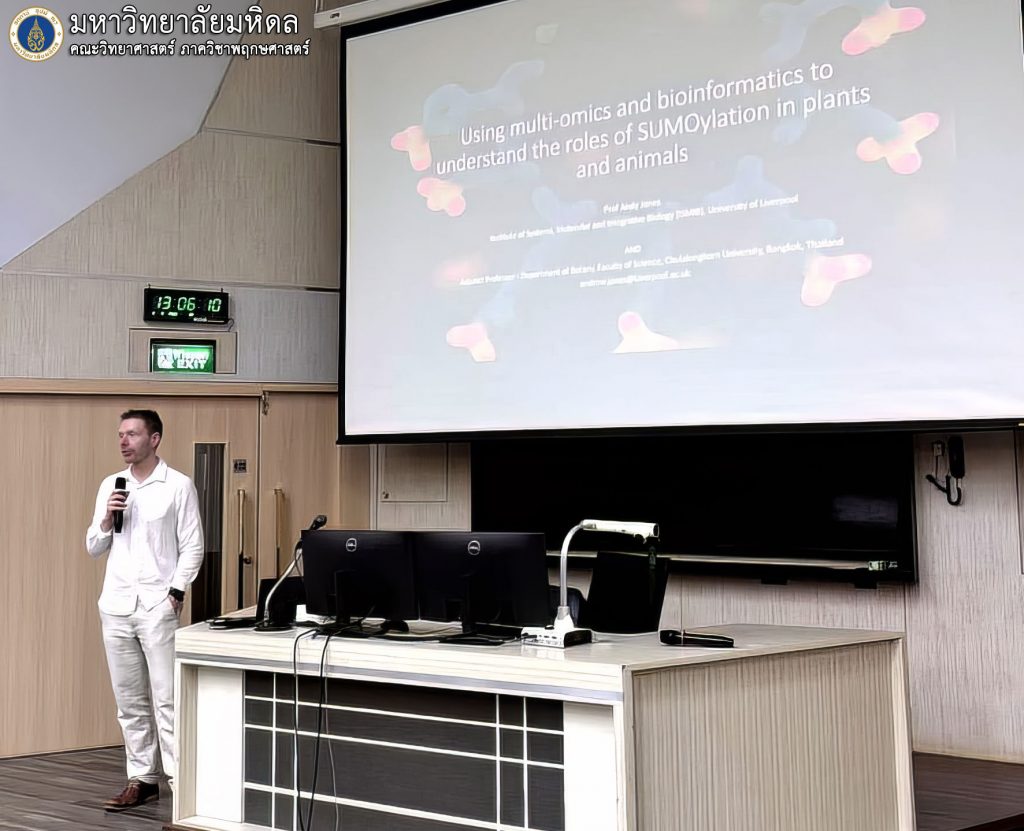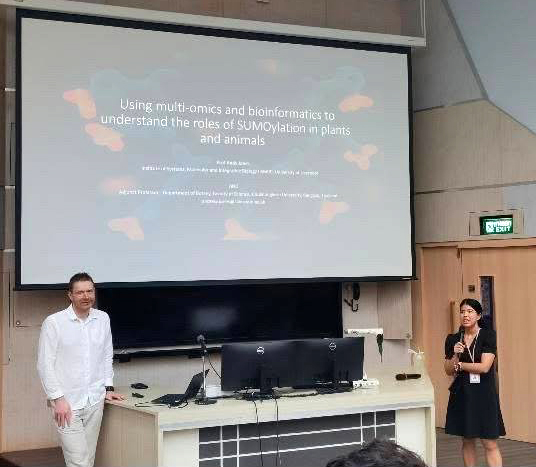

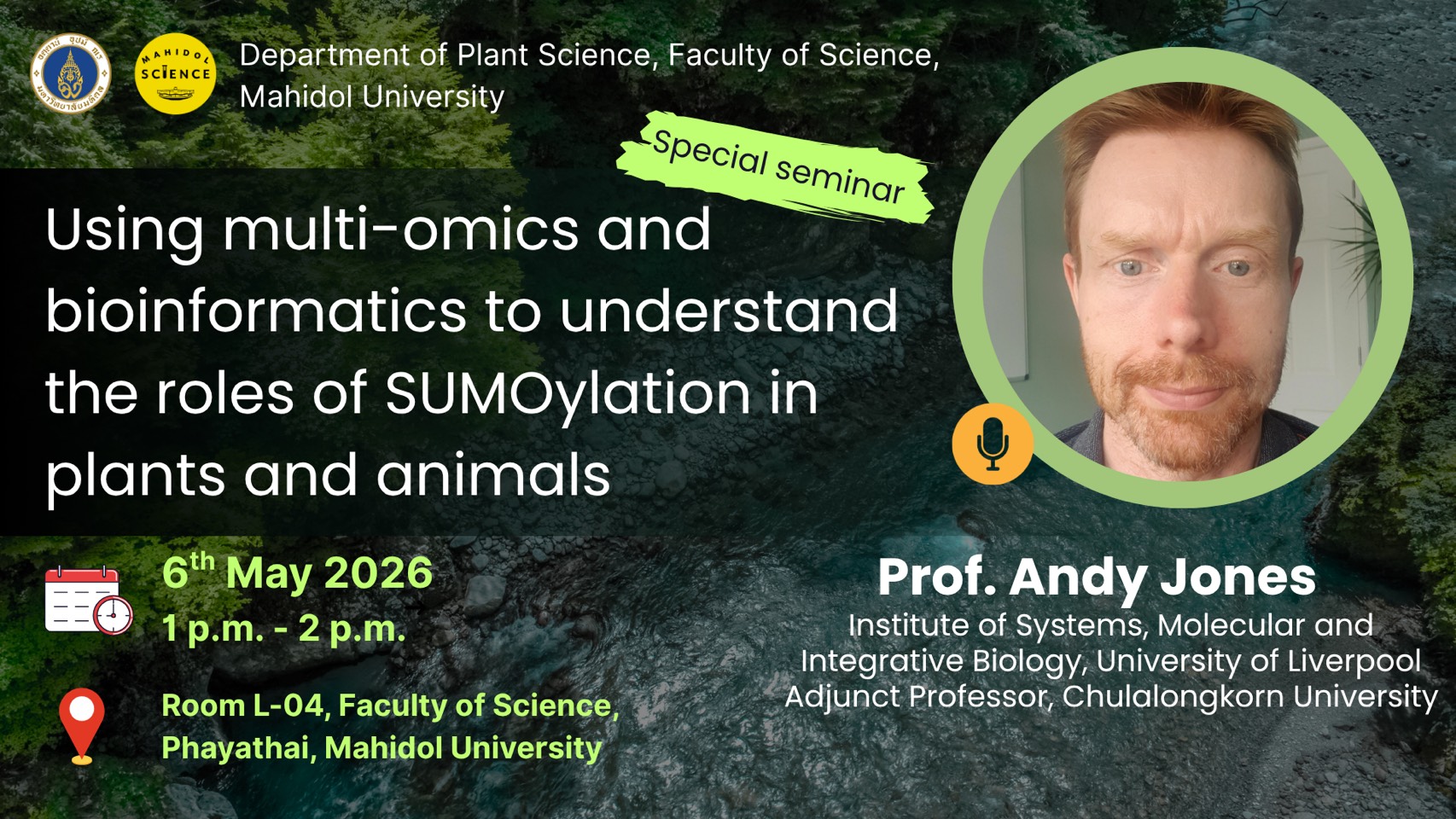
The Department of Plant Science, Faculty of Science, Mahidol University warmly welcomed Prof. Andy Jones from University of Liverpool, United Kingdom, on the occasion of his visit as a guest speaker for a special lecture held on 6 May 2026 under the topic:
“Using Multi-Omics & Bioinformatics to Study SUMOylation in Plants and Animals”
“Using Multi-Omics & Bioinformatics to Study SUMOylation in Plants and Animals”
The lecture focused on the application of multi-omics technologies and bioinformatics in the study of SUMOylation, an important cellular mechanism in which Small Ubiquitin-like Modifier (SUMO) proteins regulate and modify the functions of other proteins in both plants and animals. This process plays essential roles in stress responses, cell division, and the regulation of fundamental biological mechanisms. During the seminar, Prof. Jones shared his expertise and recent research findings from the “SUMO Code” project, which investigates the SUMO system in Arabidopsis plants. He explained the roles of tissue-specific enzymes and proteases that enable plants to adapt to adverse environmental conditions, including salt stress, osmotic stress, and pathogen attacks.
In addition, the lecture presented a pan-genome analysis of various Asian rice varieties to investigate genomic variations in SUMO proteases. This research contributes to a better understanding of stress resilience in economically important crops and highlights the application of bioinformatics in future agricultural research. Another important aspect of the presentation was the development of analytical tools and statistical frameworks for mass spectrometry techniques to more accurately identify protein modification sites. The resulting high-confidence datasets have been made publicly available through international databases and repositories.
Toward the end of the lecture, Prof. Jones also discussed the development of a large-scale human SUMOylation database, which serves as an important resource for studying the relationships between protein modifications, human health, and disease. This resource is expected to support future biomedical research. The lecture attracted considerable interest from faculty members, researchers, and students, and provided an excellent opportunity for academic exchange and the strengthening of international collaboration in molecular biology, bioinformatics, and plant science.